

Introduction
Diabetes management has evolved significantly over the past century, and insulin remains one of the most critical medications for controlling blood sugar levels. Whether you’ve recently been diagnosed with type 1 or type 2 diabetes, or you’re looking to better understand how insulin works, this comprehensive guide will help you navigate the fundamentals of insulin therapy and learn how to use it effectively for optimal health outcomes.
Understanding Insulin and Its Role in Diabetes
Insulin is a hormone naturally produced by the pancreas that regulates blood glucose levels. In people without diabetes, the pancreas continuously adjusts insulin production based on meal consumption and physical activity. However, in diabetes, this delicate balance becomes disrupted.
- In type 1 diabetes, the pancreas stops producing insulin entirely because the immune system has destroyed the insulin-producing beta cells. This means individuals with type 1 diabetes must rely entirely on injected insulin to survive.
- Conversely, people with type 2 diabetes still produce insulin, but their bodies don’t respond effectively to it—a condition called insulin resistance. Over time, type 2 diabetes may also progress to a point where insulin therapy becomes necessary.
- Understanding this distinction is crucial because it determines the type and frequency of insulin therapy you might need. Both conditions can benefit from proper insulin management, which is why learning the basics is essential for anyone dealing with diabetes.
Types of Insulin: Understanding Action Profiles
Insulin comes in several varieties, each with different characteristics related to how quickly it works, when it reaches maximum effectiveness, and how long it remains active in your body. These characteristics are known as onset, peak time, and duration—three critical factors in insulin therapy planning.
Rapid-Acting Insulin for Mealtime Coverage
Rapid-acting insulin analogs include insulin lispro (brand names Humalog, Admelog), insulin aspart (NovoLog, Fiasp), and insulin glulisine (Apidra). These insulins begin working approximately 5 to 15 minutes after injection, reach their peak effectiveness within 1 to 2 hours, and last roughly 4 to 6 hours.
- The appeal of rapid-acting insulins lies in their ability to mimic the body’s natural insulin response to meals. When you eat, your blood glucose rises, and rapid-acting insulin quickly follows suit. This makes them particularly valuable for sliding scale insulin adjustments, where insulin doses are calculated based on current blood glucose readings and anticipated carbohydrate intake.
- Insulin lispro sliding scale protocols are commonly used in hospitals and home settings. Similarly, the Novolog sliding scale provides healthcare providers and patients with clear dosing guidelines. The sliding scale insulin chart and insulin lispro sliding scale approaches allow for flexible dosing that responds to individual meal timing and portion sizes.
Short-Acting (Regular) Insulin
Regular or short-acting insulin has an onset of 30 minutes to 1 hour, peaks in 2 to 3 hours, and lasts approximately 6 to 8 hours. While longer-acting than rapid insulins, regular insulin provides more predictable coverage and is often less expensive. Regular insulin is sometimes used in an insulin sliding scale for Novolog comparisons to demonstrate the advantages of newer formulations.
Intermediate-Acting Insulin
NPH (Neutral Protamine Hagedorn) insulin represents the intermediate-acting category. It begins working in 2 to 4 hours, peaks between 4 to 12 hours later, and continues working for 12 to 18 hours. This insulin type is useful for providing background (basal) insulin coverage.
Long-Acting and Ultra Long-Acting Insulins
Long-acting insulin analogs like glargine (Lantus, Basaglar), detemir (Levemir), and degludec (Tresiba) provide steady insulin coverage for 24 hours or longer. These insulins reach the bloodstream gradually and don’t have a pronounced peak, making them ideal for basal insulin therapy. Ultra long-acting insulins like glargine U-300 can last up to 36 hours.
The Insulin Comparison Chart: Choosing the Right Insulin
An insulin comparison chart helps visualize the differences between various insulin types. Here’s how key insulins stack up:
| Insulin Type | Onset | Peak Time | Duration | Best Use |
| Insulin Lispro | 5-15 min | 30-90 min | 4-6 hours | Meals |
| Insulin Aspart (NovoLog) | 5-15 min | 1-3 hours | 3-5 hours | Meals |
| Regular Insulin | 30-60 min | 2-3 hours | 6-8 hours | Meals |
| NPH (Intermediate) | 2-4 hours | 4-10 hours | 12-18 hours | Basal coverage |
| Glargine (Long-acting) | 3-4 hours | Minimal peak | 24+ hours | Basal coverage |
This insulin comparison chart demonstrates why different insulins are prescribed for different situations. Your healthcare provider will help you select the most appropriate combination based on your diabetes type, lifestyle, meal patterns, and blood glucose targets.
U-100 Insulin Syringes: Understanding Syringe Specifications
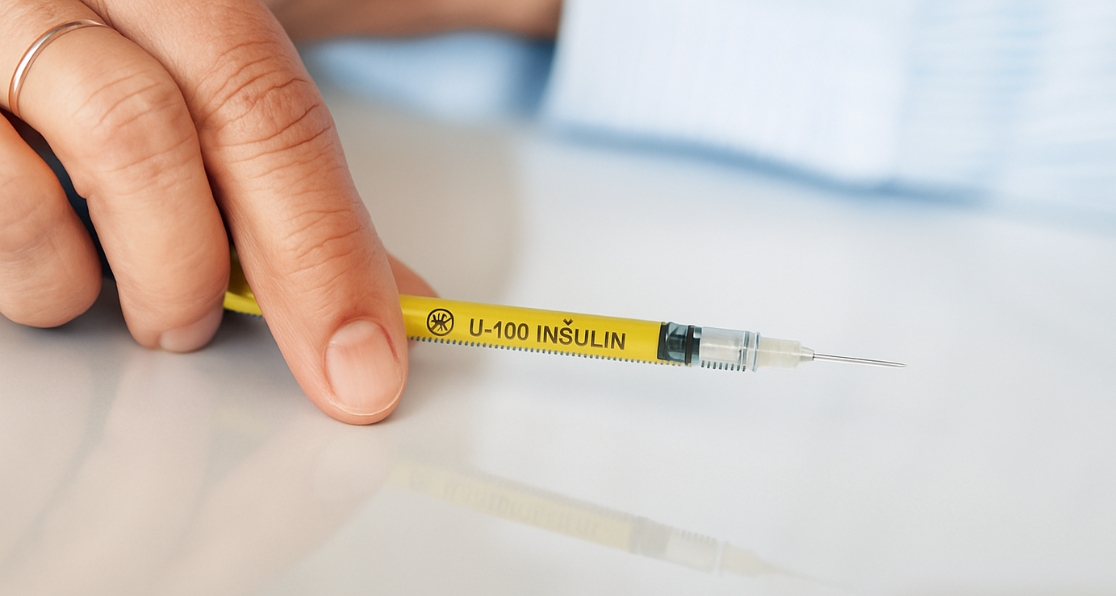
When it comes to insulin delivery, proper syringe selection is critical. The U-100 specification refers to insulin concentration: U-100 insulin contains 100 units per milliliter. This is the standard insulin concentration available in the United States today.
Understanding U-100 Insulin Syringes
U-100 insulin syringes come in three primary sizes based on maximum capacity:
- 0.3 mL U-100 syringes: Hold up to 30 units, ideal for patients taking low to moderate doses
- 0.5 mL U-100 syringes: Hold up to 50 units, suitable for moderate doses
- 1 mL U-100 syringes: Hold up to 100 units, used for higher doses
Each U-100 syringe for insulin includes clearly marked unit increments, making it easy to draw the correct dose. The needle gauge (typically 28 to 31 gauge) affects comfort during injection, while needle length (usually 4mm to 6mm) influences whether insulin is injected into fat tissue (the correct method) or deeper into muscle.
Selecting the Right U-100 Insulin Syringes
Choosing appropriate U-100 insulin syringes isn’t arbitrary. Using a syringe that matches your typical dose range ensures accuracy and safety.
- For example, someone taking 25 units daily should use a 0.5 mL U-100 syringe rather than a 1 mL syringe, as the smaller syringe’s unit marks are easier to read precisely.
- It’s worth noting that an older U-100 insulin syringe u 100 concentration—the U-40 syringe—is rarely used in modern practice outside veterinary medicine. However, international travelers should verify syringe compatibility with their insulin strength if traveling outside the United States.
- Some modern alternatives to traditional syringes include U-100 insulin syringes mounted on pens (like NovoLog FlexPen) or insulin pumps, which eliminate manual drawing while maintaining U-100 concentration precision.
Sliding Scale Insulin: A Flexible Approach to Dosing
The sliding scale insulin system represents one of the most practical approaches to insulin therapy, particularly for people newly diagnosed with diabetes or those hospitalized for acute illness. Rather than taking a fixed insulin dose daily, sliding scale therapy adjusts each dose based on your current blood glucose reading.
How Sliding Scale Charts Work
A sliding scale insulin chart, Humalog or Novolog sliding scale chart, provides specific dosing instructions based on blood glucose ranges. For example:
- Blood glucose 70-150 mg/dL: 0 additional units
- Blood glucose 151-175 mg/dL: 2 units
- Blood glucose 176-250 mg/dL: 4 units
- Blood glucose 251+ mg/dL: 6 units plus physician contact
Novolog Sliding Scale in Practice
The NovoLog sliding scale is particularly popular because NovoLog’s rapid onset makes it ideal for correcting elevated blood glucose. When using a NovoLog sliding scale, you check your blood glucose before meals and at bedtime, then administer the corresponding insulin dose. This insulin sliding scale for Novolog approach provides flexibility because each injection quantity is individualized to that moment’s glucose level.
Insulin Lispro Sliding Scale Considerations
Similarly, the insulin lispro sliding scale operates on the same principle. The insulin lispro sliding scale method is commonly used in hospital protocols and outpatient diabetes management. Like the Novolog sliding scale, this approach requires multiple daily blood glucose checks and calculations, making it essential to understand how your specific insulin sliding scale for Novolog or Lispro protocol works.
Advanced Insulin Regimens: Beyond Sliding Scale
While sliding scale insulin chart, Humalog,g, and similar approaches work well for some, many diabetes experts now recommend more sophisticated regimens. The basal-bolus method combines long-acting basal insulin (typically once or twice daily) with rapid-acting bolus insulin (mealtime doses). This approach often provides better blood glucose control than the sliding scale alone.
Basal-Bolus Therapy
In a basal-bolus regimen, you might use:
- Long-acting insulin (like glargine) as your basal foundation
- Rapid-acting insulin (like insulin lispro or insulin aspart) with meals
- An additional correction dose for high blood glucose readings
This combines the steady background coverage of basal insulin with the flexibility of bolus dosing—often resulting in better overall glucose control and fewer episodes of low blood sugar compared to sliding scale therapy alone.
Practical Tips for Insulin Therapy Success
Injection Technique and Safety
Whether using traditional U-100 insulin syringes or modern insulin pens, proper technique is crucial. Always:
- Inject into subcutaneous fat tissue (not muscle)
- Rotate injection sites to prevent lipohypertrophy (fatty lumps)
- Keep insulin at appropriate temperatures (typically refrigerated until use)
- Never reuse U-100 syringes for insulin—each injection requires a new sterile needle
- Check expiration dates on insulin bottles and pens
Blood Glucose Monitoring
Successful insulin therapy requires regular blood glucose monitoring. Testing before meals, two hours after meals, and at bedtime provides the data needed to adjust sliding scale insulin chart Humalog protocols or other regimens. Continuous glucose monitors (CGMs) offer even more detailed glucose patterns and can help optimize insulin timing.
Working With Your Healthcare Team
Your doctor or diabetes educator should help you:
- Understand your specific insulin regimen
- Learn when to adjust doses
- Recognize and treat low blood sugar episodes
- Develop an action plan for sick days
- Adjust insulin based on diet, exercise, and stress changes
Common Misconceptions About Insulin
Many people worry that starting insulin means their diabetes is “worse” or that they’ve “failed” at managing it. In reality, insulin is a powerful tool that, when used appropriately, significantly reduces the risk of diabetes complications like kidney disease, vision problems, and heart disease.
Another misconception suggests that insulin causes weight gain. While insulin can contribute to modest weight changes, this effect is manageable with proper diet and exercise, and the benefits of good glucose control far outweigh this concern.
Conclusion: Taking Control of Your Diabetes
Understanding insulin basics—from how different types work to proper injection technique with U-100 insulin syringes and sliding scale insulin chart Humalog protocols—empowers you to take an active role in your diabetes care. Whether you’re using rapid-acting insulin like insulin lispro or Novolog sliding scale protocols, or combining basal and bolus approaches, the key is working closely with your healthcare team to find the regimen that works best for your lifestyle and health goals.
Disclaimer
This article is for educational purposes only and should not replace professional medical advice. Always consult with your healthcare provider before making any changes to your insulin regimen or diabetes management plan.
