

Understanding Fordyce Spots: The Complete Guide to Skin Health
What Are Fordyce Spots? Separating Fact from Fiction
Have you noticed small, pale bumps on your lips or intimate areas and felt a sudden spike of anxiety? You’re not alone. Millions of people discover Fordyce spots every year and immediately assume the worst. But here’s the truth that dermatologists want you to know: these mysterious spots are completely harmless and far more common than you think.
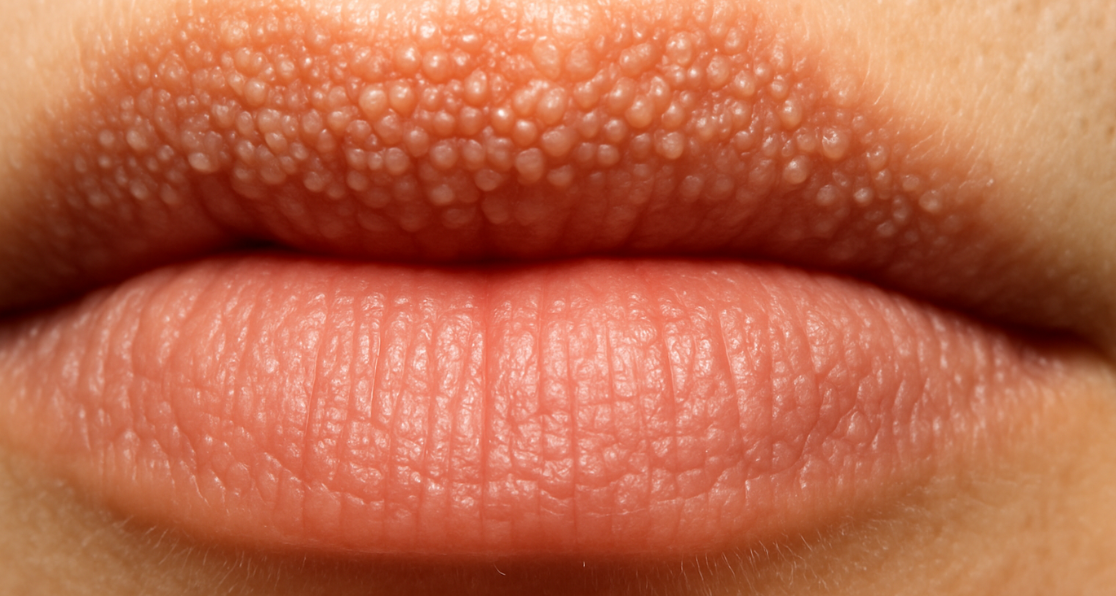
- Fordyce spots, also known as Fordyce granules, are small, harmless bumps that typically appear on the lips, oral mucosa, or genital areas. These spots are actually enlarged sebaceous glands—the same oil-producing glands that keep your skin moisturized throughout the day. What makes them seem unusual is their location in areas where hair follicles don’t typically exist, creating that distinctive appearance that often catches people off guard.
- Despite their sometimes alarming presence, particularly when discovered on the genitals or lips, Fordyce spots are completely benign and represent a natural anatomical variation rather than any disease or infection. Think of them as your body’s unique fingerprint—just like some people have more visible pores or prominent oil glands on their face, others have visible sebaceous glands in different locations.
- The surprising truth? Medical professionals have identified that approximately 70 to 80 percent of adults have Fordyce spots, making them far more common than many people realize. The condition is notably more prevalent in males, with a male-to-female ratio of approximately 2:1. If you have them, you’re part of an enormous majority—not an anomaly.
Understanding the Causes of Fordyce Spots: Why Do They Appear?
The question of what Fordyce spots are caused by has intrigued dermatologists and researchers for generations. While the exact etiology remains somewhat mysterious, scientific evidence points to several fascinating contributing factors that explain their development.
The Puberty Connection
Here’s something surprising: these spots are typically present at birth, but they remain invisible until puberty arrives. During adolescence, hormonal changes—particularly the surge in gonadal and adrenal androgenic hormones—cause the sebaceous glands to enlarge and become visible on the skin’s surface. It’s essentially your body’s natural response to hormonal maturation.
Genetic Predisposition: It’s in Your Genes
If you’re wondering why your friend doesn’t have them while you do, genetic predisposition plays a significant role. If your parents had prominent Fordyce spots, there’s a higher likelihood you’ll develop them as well. Your DNA essentially programs whether these glands will be more or less visible throughout your lifetime.
Additional Contributing Factors
Beyond genetics and hormones, several other factors influence their prominence:
- Hormonal fluctuations during different life stages
- Excess lipid production in your body’s sebaceous system
- Hyperlipidemia (elevated cholesterol levels) may increase visibility
- Age and skin maturity affect their appearance
What They’re NOT Caused By
Contrary to common misconceptions that create unnecessary worry:
- They are NOT caused by poor hygiene
- They are NOT sexually transmitted infections
- They are NOT indicative of any infectious disease
- They are NOT related to sexual activity or promiscuity
They represent a normal physiological variation, similar to how some people have naturally more visible pores, freckles, or oil glands than others. Think of them as your body’s unique characteristic—nothing more, nothing less.
Fordyce Spots on Private Areas: Understanding Genital Concerns
One of the most anxiety-inducing discoveries is when Fordyce spots appear in private areas, particularly on the genital zones. When these spots appear on the penis, scrotum, or vulva, it’s understandable why they cause immediate concern and embarrassment. But understanding what they truly are can completely transform your perspective.
Appearance on Genital Tissue
Fordyce spots on the penis most frequently appear on the shaft, particularly on the ventral surface (the underside). These spots typically present as:
- Small, pale, or yellowish papules
- Individual spots or grouped clusters
- Slightly raised bumps (1-5 millimeters in diameter)
- Either isolated or scattered across the surface
Important reassurance: Their presence in intimate areas doesn’t indicate any health problem or infection whatsoever.
Symptom Profile
Some individuals with Fordyce spots on private areas report:
- Mild itching or discomfort
- Slight tenderness to touch
- Cosmetic concern rather than physical discomfort
However, most people experience no symptoms whatsoever. The psychological impact often exceeds the physical effects, with many individuals seeking treatment purely for cosmetic reassurance and peace of mind, which is completely valid and understandable.
Why the Anxiety Exists
The discovery of unexpected bumps in intimate areas naturally triggers concern. Sexual health is personal, and any unexplained changes can feel alarming. But knowing that these bumps are present from birth, are completely harmless, and affect most of the population can significantly ease the worry that many experience.
Distinguishing Fordyce Spots from Herpes: The Critical Comparison
This is one of the most important distinctions you need to understand. Confusion between Fordyce spots and herpes frequently causes unnecessary anxiety, sleepless nights, and unnecessary medical interventions. Understanding the critical differences provides both peace of mind and appropriate guidance.
The Comparison: Fordyce Spot vs Herpes
| Characteristic | Fordyce Spots | Herpes |
| Appearance | Small, painless, pale or yellowish bumps | Fluid-filled blisters, clustered groups |
| Pain Level | Painless, non-tender | Extremely painful and tender |
| Timeline | Remain static and unchanged indefinitely | Appear, rupture, crust over, heal in 1-3 weeks |
| Associated Symptoms | None | Fever, body aches, swollen lymph nodes, systemic illness |
| Contagion Risk | Zero contagion risk | Highly contagious during active outbreaks |
| Cause | Enlarged sebaceous glands | Herpes simplex virus (HSV) infection |
| Recurrence | Never recurs—permanent presence | Recurs periodically when the virus reactivates |
Why This Distinction Matters
The underlying causes are fundamentally different:
- Fordyce Spots result from enlarged sebaceous glands and pose no contagion risk whatsoever. They’re a structural anatomical feature.
- Herpes is a viral infection caused by the herpes simplex virus (HSV) and is highly contagious through sexual contact or skin-to-skin contact during active outbreaks. It requires antiviral treatment and infection control measures.
- Professional guidance is essential: If you’re uncertain about distinguishing between Fordyce spots and herpes, consulting a healthcare professional for proper diagnosis provides crucial peace of mind and ensures appropriate management if needed.
Treatment and Management Approaches: Your Options Explained
While Fordyce spots require no medical treatment from a health perspective, many individuals choose removal for psychological comfort and cosmetic reasons. Understanding your options empowers informed decision-making.
Non-Invasive and Topical Options
For those seeking solutions, various treatment modalities exist, though not all prove equally effective.
Topical Retinoids (Tretinoin/Retin-A)
Many individuals wonder about Fordyce gel and other topical treatments. Topical retinoids like tretinoin have shown promise in studies for reducing the appearance of Fordyce spots by promoting cellular turnover and shrinking sebaceous gland size. However, retinoid effectiveness is limited, particularly when applied to genital areas, where they can cause significant irritation and sensitivity.
Topical Trichloroacetic Acid (TCA)
This chemical works by cauterizing or burning affected tissue, though results are often temporary and may require repeated applications. The procedure can be uncomfortable and carries risks of scarring or pigmentation changes.
Oral Isotretinoin (Accutane) at Low Doses
Oral isotretinoin at low doses of 5-10 mg daily has demonstrated significant effectiveness in preventing Fordyce spot recurrence by reducing oil gland activity. However, this approach requires strict dermatological supervision due to potential side effects and should only be considered after thorough professional consultation.
Advanced Laser and Surgical Treatments: Superior Results
The most effective and permanent solutions for the cure of Fordyce spots on the shaft and other areas involve advanced dermatological procedures that deliver dramatic cosmetic improvements.
CO2 Laser Treatment – The Gold Standard
CO2 laser treatment stands as the gold standard, using focused laser energy to precisely vaporize affected tissue. This revolutionary approach:
- Offers excellent cosmetic results
- Results in minimal scarring
- Typically requires only 1-2 sessions for complete clearance
- Provides permanent resolution
- Heals within 1-2 weeks
Pulsed Dye Laser Treatment
This effective alternative presents distinct advantages:
- Reduced scarring risk compared to CO2 lasers
- Faster healing time
- Excellent cosmetic outcomes
- Lower risk of pigmentation changes
Electrosurgery or Electrodesiccation
This precision technique uses controlled electrical current to remove spots with accuracy, though it carries a slightly higher risk of pigmentation changes in darker skin types.
Micro-Punch Surgery – Precision Excellence
Micro-punch surgery, performed under local anesthesia, uses a small pen-like device to remove individual spots with meticulous precision. This cutting-edge technique:
- Demonstrates exceptional long-term results
- Shows zero recurrence over extended follow-up periods
- Results in minimal complications
- Takes 30 minutes to 3 hours, depending on the spot quantity
- Proves particularly effective for Fordyce spots on private areas where precision is crucial
The Appearance and Characteristics: What You’re Actually Seeing
Understanding what you’re looking at removes much of the mystery and anxiety surrounding discovery.
Size and Distribution
Fordyce spots typically measure between 1-5 millimeters and appear as clusters of 50-100 individual spots, though they can also occur in isolation. The characteristic appearance includes:
- Small, slightly elevated papules
- Creamy-yellow or white coloration
- More apparent when the skin is stretched
- Smooth texture without ulceration or drainage
Fordyce spots pics found in medical literature consistently show this distinctive presentation, making visual identification relatively straightforward for healthcare professionals and helping patients recognize what they’re observing.
Location Patterns
On the lips and oral mucosa, they appear most noticeably on the vermilion border or inside the cheeks. When present on genital tissue, they’re usually bilateral and symmetrical, distributed on the glans, shaft, scrotum, or labial areas depending on the individual’s anatomy.
Important Misconceptions and Clarifications: Separating Truth from Myth
Despite their benign nature, numerous myths surround Fordyce spots that create unnecessary worry and anxiety. Let’s address the most damaging misconceptions directly.
Myth #1: “These spots indicate poor hygiene.”
Truth: Fordyce spots have absolutely nothing to do with cleanliness or hygiene practices. They’re a naturally occurring anatomical feature present from birth.
Myth #2: “They’re sexually transmitted infections.”
Truth: They’re not infections at all—they’re enlarged glands. They cannot be transmitted through sexual contact.
Myth #3: “Having them means something is wrong with me.”
Truth: 70-80% of adults have Fordyce spots. You’re part of an enormous majority, not an anomaly.
Myth #4: “They indicate promiscuity or sexual disease.”
Truth: Completely false. Sexual activity and the number of partners have zero correlation with Fordyce spot development.
Myth #5: “I need medical treatment immediately.”
Truth: From a medical standpoint, no treatment is necessary. Treatment is purely optional and cosmetic.
When to Consider Treatment: Making Your Decision
While Fordyce spots require no medical treatment from a health perspective, many individuals choose removal for valid personal reasons. The decision to pursue treatment should be entirely personal, considering:
- Number and location of spots (facial vs. genital vs. oral)
- Emotional impact on confidence and comfort
- Cosmetic concerns affecting quality of life
- Realistic expectations about outcomes
- Personal preference regarding treatment
Those bothered by Fordyce spots on the private area or facial areas have several proven treatment pathways. Professional assessment by a dermatologist helps determine the most suitable approach based on spot characteristics, skin type, and individual preferences.
Diagnosis and Professional Assessment: Getting Answers
Healthcare professionals typically diagnose Fordyce spots through clinical examination alone, rarely requiring biopsies, given their characteristic appearance. The diagnosis becomes important primarily for differential diagnosis—distinguishing Fordyce spots from conditions like herpes, genital warts, or other lesions requiring treatment.
Why Professional Evaluation Matters
If uncertainty exists regarding your condition, seeking professional evaluation ensures:
- Accurate diagnosis, preventing unnecessary worry
- Appropriate management recommendations
- Ruling out other conditions requiring treatment
- Peace of mind regarding sexual health
- Personalized treatment options if desired
This is particularly important for spots on genital tissue, where ruling out sexually transmitted infections provides crucial reassurance and ensures you receive appropriate care if needed.
Conclusion: Understanding Your Body, Reclaiming Your Confidence
Fordyce spots represent one of the most common and benign skin conditions affecting the population. While their appearance on the lips, oral mucosa, or genital areas can cause understandable concern and embarrassment, understanding their harmless nature helps contextualize the condition appropriately. The essential takeaway remains constant: These are normal anatomical variations requiring no medical intervention unless psychological comfort or cosmetic concerns warrant treatment. Your body is normal. You are healthy. And these spots don’t define you. Armed with accurate information and understanding, you can move forward with confidence, whether you choose to treat them or embrace them as part of your unique biological identity.