
Introduction
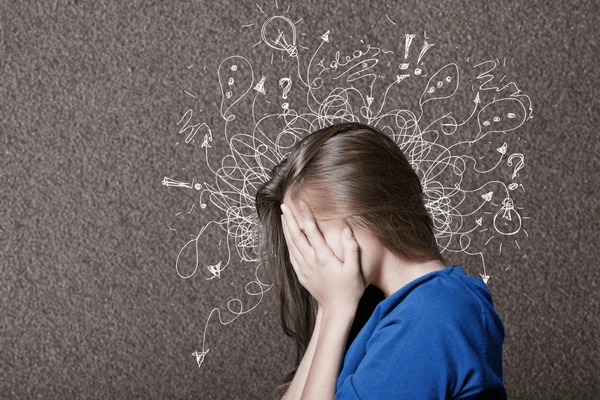
It starts with a subtle twitch in your eyelid. Or maybe a slight elevation in your heart rate after walking up the stairs. For most people, these are just background noises of being alive. But for a growing number of us, these sensations trigger a catastrophic internal alarm.
Is it a heart condition?
You hit Google, you spiral, and suddenly, you are convinced that a serious illness is looming. This is called Health Anxiety, and in our high-stress, post-pandemic world, it is becoming a silent epidemic—particularly among young adults and university students. For years, we’ve been told the solution is to “stop Googling symptoms” or “meditate more.” But a groundbreaking new study involving over 4,000 participants has just blown the lid off a massive, overlooked connection. The research suggests that your anxiety isn’t just in your head—it’s in your movement. Or rather, the lack of it.
Is it a neurological disorder?
If you have been feeling trapped in a cycle of worry about your health, the missing link might not be a doctor’s visit. It might be something researchers call MVPA, fueled by a specific “Psychosocial Triad” that you are likely neglecting. Here is the deep dive into why your body is sounding the alarm, and the science-backed blueprint to turning it off.
The “Worry Loop”: Why We Misinterpret Our Own Bodies
To understand the solution, we must first understand the trap. The study, conducted on third-year undergraduates across 16 universities, highlights a fascinating mechanism behind health anxiety. People with high health anxiety suffer from interoceptive bias. This means they pay too much attention to their internal bodily sensations and, crucially, misinterpret them.
When you are sedentary (physically inactive), your body becomes a stranger to you. A sudden spike in heart rate feels dangerous because your heart is rarely tested. Muscle fatigue feels like a disease symptom because your muscles are rarely used.
The research found a stark, undeniable correlation
Higher physical inactivity predicts greater health anxiety.
When you stop moving, two things happen:
- You lose the “buffer”: Exercise naturally burns off stress hormones like cortisol. Without it, that chemical anxiety sits in your system.
- You lose the “proof”: When you exercise, you prove to your brain that your body is capable, strong, and resilient. When you are inactive, your brain begins to view your body as fragile and vulnerable.
But here is the twist. The study didn’t just say “go for a run.” It found that forcing yourself to exercise isn’t enough. There are three specific psychological ingredients required to make the anxiety disappear.
Unlocking the “Psychological Triad.”
They discovered that movement alone wasn’t the magic pill. The movement had to be fueled by Psychosocial Resources. Think of these as the engine oil. Without them, the engine of exercise grinds to a halt, and the anxiety returns. The study identified three specific resources that mediate the link between exercise and peace of mind.
1. The Spark: Enjoyment (The “Fun Factor”)
In the world of “grindset” fitness, we often treat exercise as a punishment for eating poorly or a chore to be endured. The data shows this is a failing strategy. Students who actually enjoyed the activity didn’t just move more; they experienced a significant drop in health anxiety.
The Science: When you enjoy movement, it satisfies the psychological need for autonomy. You are doing this because you want to, not because you have to. This shifts your nervous system from a state of “threat” to a state of “play,” directly countering the fear-based pathways of anxiety.
2. The Shield: Self-Efficacy (The “I Can Do This” Factor)
- Self-efficacy—your belief in your own ability to succeed—was a massive predictor. The study revealed that higher self-efficacy led to lower physical inactivity.
- For someone with health anxiety, self-efficacy is the ultimate shield. If you believe you are capable of handling physical stress (like a tough workout), you are less likely to panic when you feel physical sensations (like a racing heart).
- The Mechanism: Regular exposure to MVPA builds this confidence. It is exposure therapy. You raise your heart rate on purpose, you survive, and your brain learns: “A fast heart rate isn’t a heart attack; it’s just effort.”
3. The Safety Net: Social Support
Perhaps the most heartwarming finding of the study was the role of social support. Students who felt supported by peers and family were significantly less inactive. Health anxiety is isolating. You feel like you are the only one noticing these symptoms. Social exercise—whether it’s a team sport, a run club, or just a gym buddy—breaks that isolation. It normalizes the experience of physical exertion. When you see your friend out of breath and red-faced, you realize that your own breathlessness is normal, not a symptom of doom.
The BMI Barrier: A Vicious Cycle
The research also touched on a sensitive but critical variable: Body Mass Index (BMI).
The data showed a negative correlation
Higher BMI predicted lower engagement in vigorous activity. However, importantly, BMI did not directly cause the anxiety. It worked indirectly. Higher BMI often led to lower movement, and that lack of movement led to anxiety. This is a crucial distinction. It means that regardless of your weight, the act of moving is medicine. The anxiety doesn’t come from the number on the scale; it comes from the stillness of the body. Breaking the cycle of “I’m too out of shape to move” is the first step toward quieting the mind.
Why This Matters for You (Not Just Students)
While this study focused on university students in China, the biological and psychological mechanisms are universal.
We live in an era where PE classes cease to exist the moment we graduate. We enter the workforce, sit in chairs for 8 to 10 hours a day, and wonder why our mental health is deteriorating.
The study proves that the “PE Class Model”—structured time for vigorous activity, done with peers, in a way that builds confidence—is exactly what the adult brain needs to fight hypochondria.
The Takeaway: Your 3-Step Anti-Anxiety Action Plan
Based on the structural equation modeling of this research, here is how you can hack your own psychology to lower health anxiety:
1. Stop “Working Out” and Start “Playing.”
If you hate the treadmill, get off it. The data shows that enjoyment is the driver of consistency. If you don’t enjoy it, you won’t sustain the MVPA levels needed to reduce anxiety.
- Action: Try dance, rock climbing, martial arts, or hiking. Find the thing that makes you forget you are exercising.
2. Recruit Your “Anxiety Squad.”
Social support was a key mediator in reducing inactivity. Do not suffer in silence.
- Action: Stop exercising alone in your basement. Join a class, hire a trainer, or just walk with a friend. The shared experience dampens the fear response.
3. Reframe the Racing Heart
Use exercise as a laboratory to test your body. Build your Self-Efficacy.
- Action: When you exercise and feel your heart pound, tell yourself: “This is my body doing exactly what it is designed to do.” Every workout that doesn’t kill you makes your anxiety weaker.
The Verdict
Health anxiety is a thief. It steals your present moments by forcing you to worry about a future illness that likely doesn’t exist. But this new research offers a powerful weapon against that thief. It isn’t a pill, and it isn’t a reassurance from a doctor (which usually only helps for a few hours anyway). The cure is action. It is re-engaging with your body so that you stop fearing it. It is finding joy in movement, building confidence in your physical resilience, and doing it alongside people who support you. Your body is not a ticking time bomb. It is a machine built for motion. The sooner you start using it, the sooner the alarm in your head will finally go silent.